
You can usually hear a muscle car before you see it. That low rumble at a stoplight, the rough idle drifting from an open garage on a Saturday afternoon — for about a decade starting in the mid-1960s, Detroit built cars that sounded, looked, and behaved like nothing else on the road. Drivers who lived through that era never quite shook the feeling.
What follows is a tour through 30 of those cars. Some you’ll recognize before you finish reading the name. Others might surprise you — quiet performers from brands that don’t usually get the credit, or rare versions you may have forgotten ever existed. Take your time scrolling through.
1. 1964 Pontiac GTO
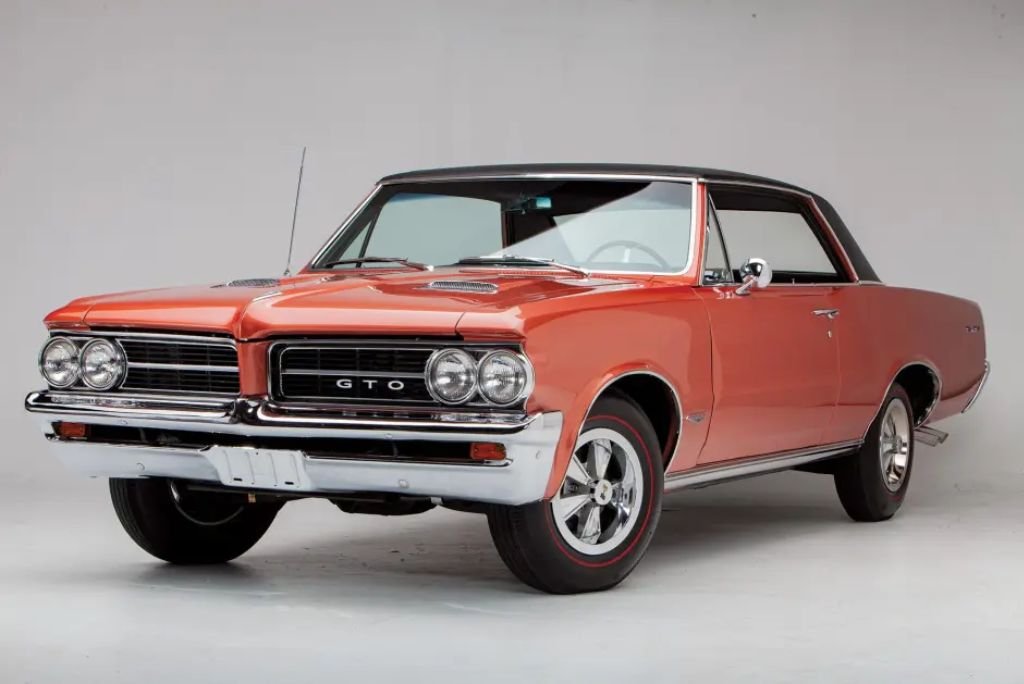
The GTO is widely credited as the car that launched the muscle car era. Pontiac’s engineers — most famously John DeLorean — dropped a big 389 V8 into the mid-size Tempest LeMans body and offered the GTO as an option package. It was a gamble against GM’s internal rules limiting engine size in smaller cars, and the gamble paid off. Sales took off, and the rest of Detroit followed within a couple of years.
The name itself came with some controversy. GTO was already used by Ferrari for one of its racing cars, and Pontiac essentially borrowed it without asking. Whether that was bold marketing or an outright provocation depends on who’s telling the story. Either way, the 1964 GTO is the starting point for nearly every muscle car conversation that follows, which is why it earns the opening slot on a list like this one.
2. 1969 Dodge Charger R/T
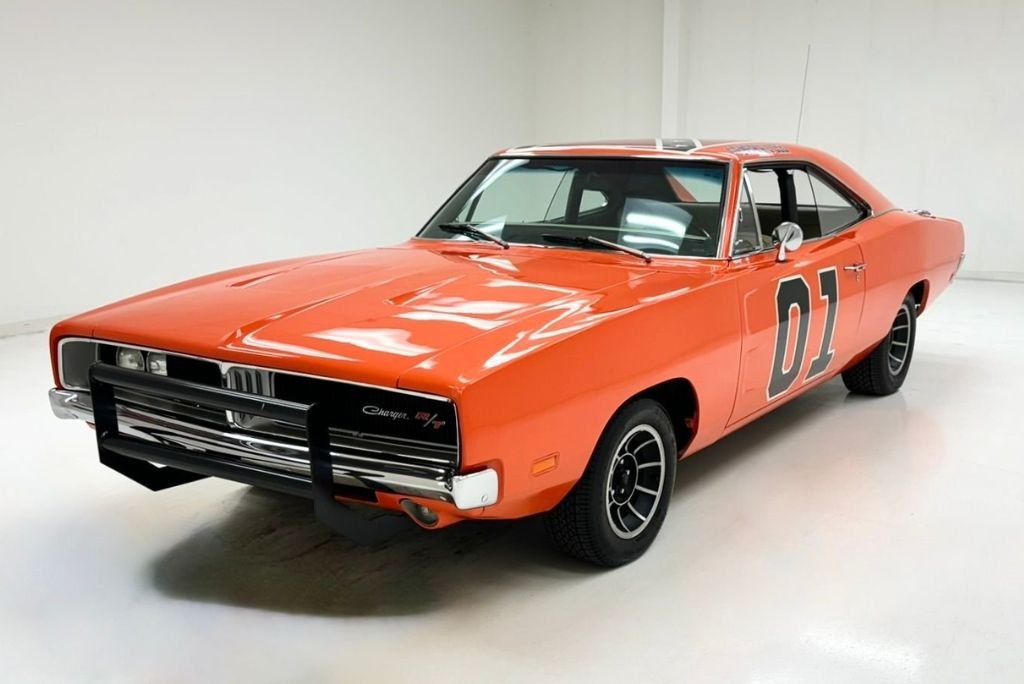
The second-generation Charger body, produced from 1968 through 1970, became one of the most recognizable muscle car silhouettes ever built. Hidden headlights, a Coke-bottle waist, and flying-buttress rear pillars gave it a shape unlike anything else on the road. The R/T was the performance trim, with the 440 Magnum as the standard big-block and the legendary 426 Hemi available as an option for buyers who wanted the most aggressive setup.
Pop culture did the rest. The Charger appeared as the villain car in a famous chase film and as a small-town legend in a long-running TV series, keeping it visible long after production ended. Today, even people who couldn’t name another muscle car can usually point to a 1969 Charger and tell you what it is. That kind of cultural footprint is rare.
3. 1970 Plymouth Hemi ‘Cuda
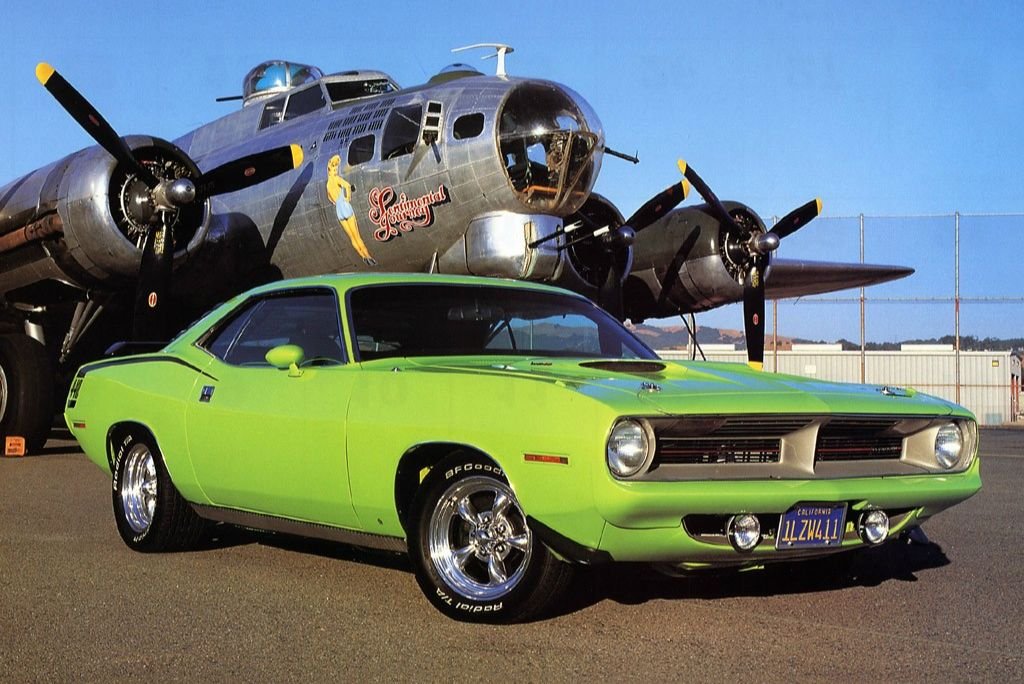
1970 was the first year of the dramatic E-body Barracuda, and the ‘Cuda was its performance package. The Hemi sat at the top of the engine list — an option only a small fraction of buyers checked because of cost and insurance. Wide stance, available shaker hood, and bold factory colors with names like Plum Crazy, Lemon Twist, and Sublime Green gave the car a look as loud as its engine.
Today the Hemi ‘Cuda is often called the holy grail of muscle cars. The combination of dramatic new styling, the legendary 426 Hemi, and the small number actually built has made it one of the most coveted American cars of the era. Surviving examples regularly appear at major shows, and most show-goers know to stop and look when one is on display.
4. 1969 Ford Mustang Mach 1
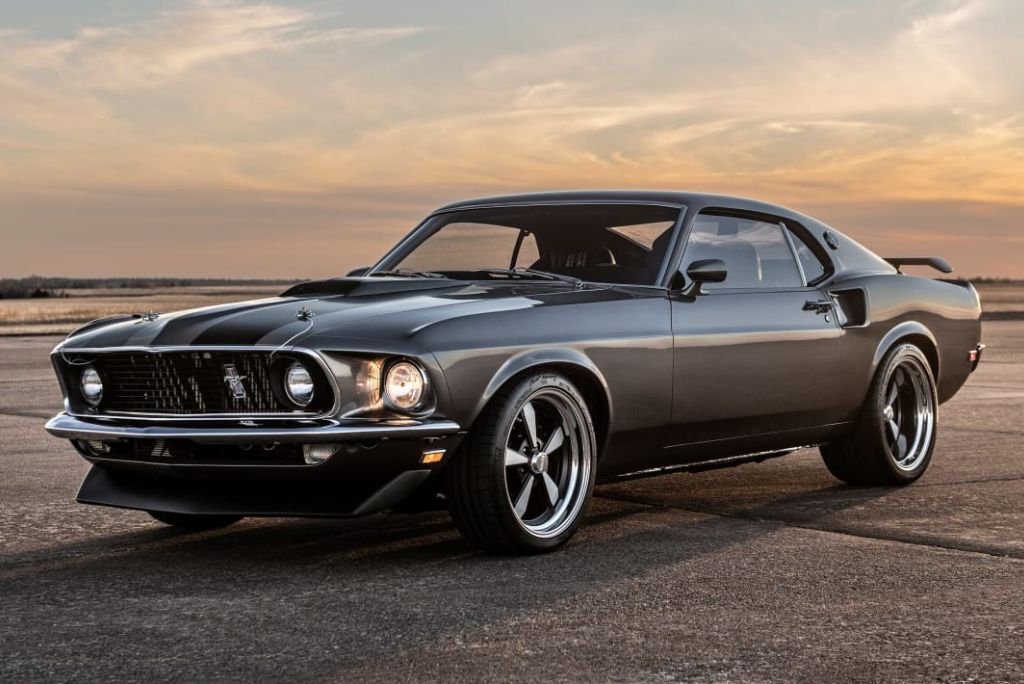
The Mach 1 arrived for the 1969 model year as a performance-styled Mustang fastback. It came with hood scoops, side stripes, racing mirrors, and a choice of V8 engines depending on what the buyer was willing to spend. By that point the Mustang body had grown longer and meaner than the original 1964½ car, with a more aggressive stance and a clearly muscle-oriented attitude.
Of all the Mustang variants from this era, the Mach 1 is probably the one most people picture when they hear “classic Mustang.” It hit a sweet spot — aggressive enough to feel like a real muscle car, accessible enough that plenty of regular drivers actually ended up behind the wheel. For a lot of older Americans, the first muscle car they ever rode in was a friend’s Mach 1.
5. 1970 Chevrolet Chevelle SS 454
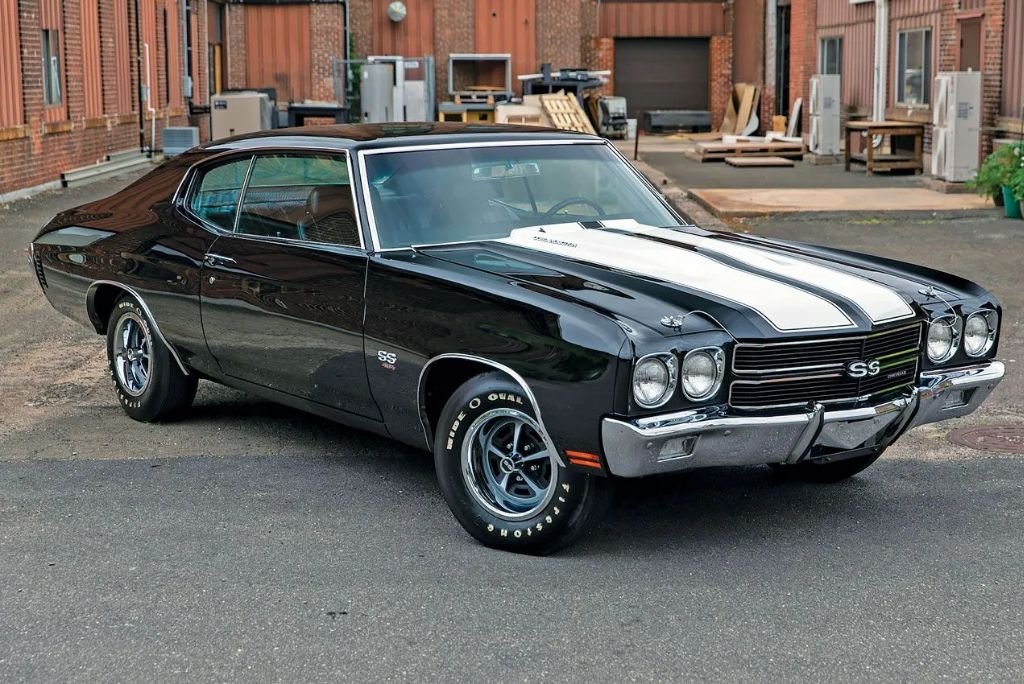
1970 is widely considered the peak year of the Chevelle SS. The body was muscular without being cartoonish, the SS package added a cowl induction hood with bold racing stripes, and the 454 big-block sat at the top of the engine list. Factory colors included Tuxedo Black, Cranberry Red, and Cortez Silver, all of which still look right on a restored example today.
Among Chevy fans, the 1970 SS 454 sits near the top of any short list of greatest Chevelles. It represented the high-water mark for the model before insurance pressure and emissions changes started reshaping the lineup the following year. The cowl induction hood with twin stripes has become one of the most copied muscle car looks in restomod and reproduction circles, which says a lot.
6. 1969 Plymouth Road Runner
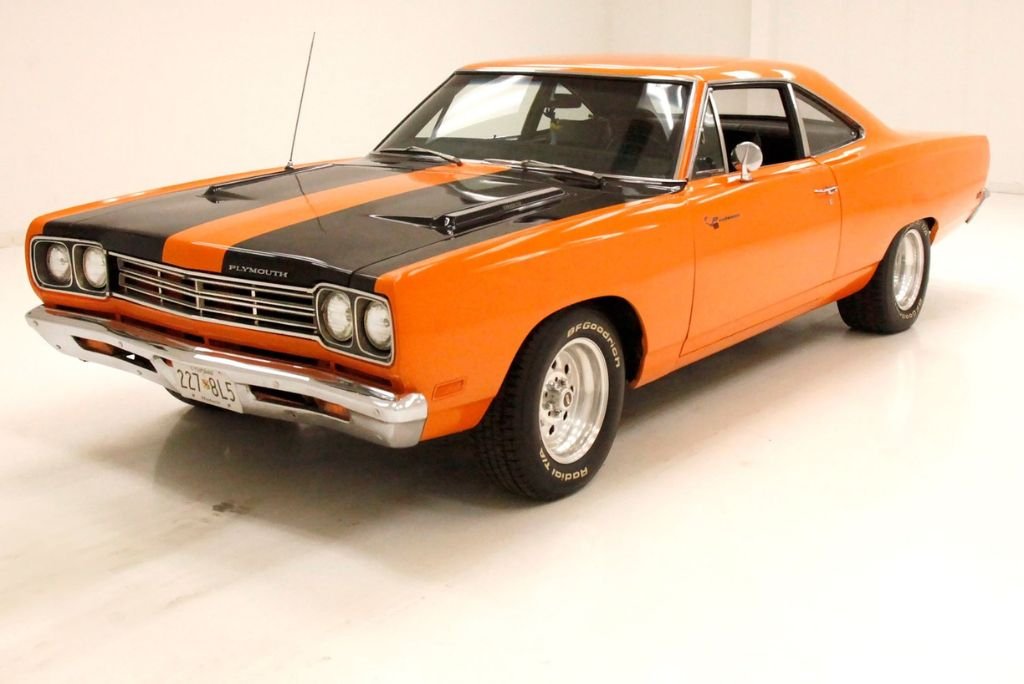
Plymouth’s pitch with the Road Runner was simple: take the B-body platform, strip out the luxuries, drop in a big engine, and charge less. The sticker price came in well below most of its competitors, and the car sold in surprisingly large numbers. Even the horn was part of the act — it played a “beep-beep” tone designed to match the cartoon character on the badges.
What’s easy to forget is that Plymouth actually licensed the Road Runner character from Warner Bros. for the badges, decals, and that distinctive horn — an unusual move for a major automaker at the time. The combination of cartoon branding and genuine performance made it stand out on dealer lots and helped define what an affordable muscle car could look like in the late 1960s.
7. 1969 Pontiac GTO “Judge”
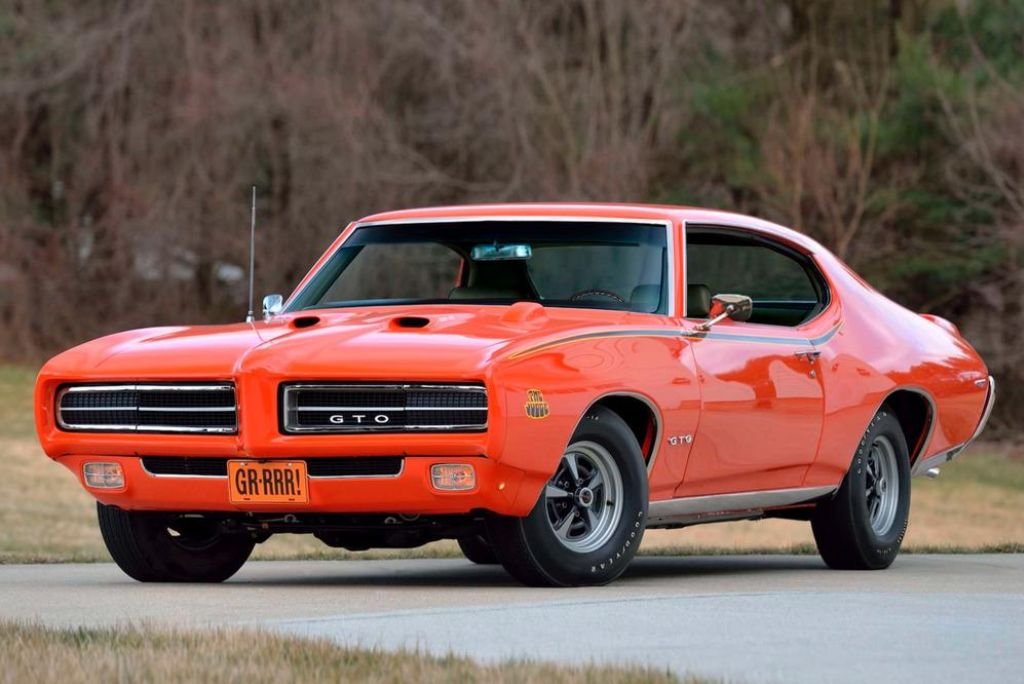
By 1969, the muscle car market was crowded and Pontiac wanted the GTO to stand out on showroom floors. The Judge package added Ram Air engines, a rear spoiler, distinctive striping, and “The Judge” decals on the front fenders and trunk lid. Carousel Red — a vivid orange-red — was the launch color, and it remains the color most often pictured when people think of the Judge today.
The name came from a recurring bit on Rowan & Martin’s Laugh-In, the comedy show that defined late-1960s TV humor. That single reference dates the car instantly to anyone who watched the show in 1969. The graphics package was deliberately loud, designed to grab attention at every stoplight, and it still does the same thing at any car show it pulls into.
8. 1970 Pontiac Firebird Trans Am
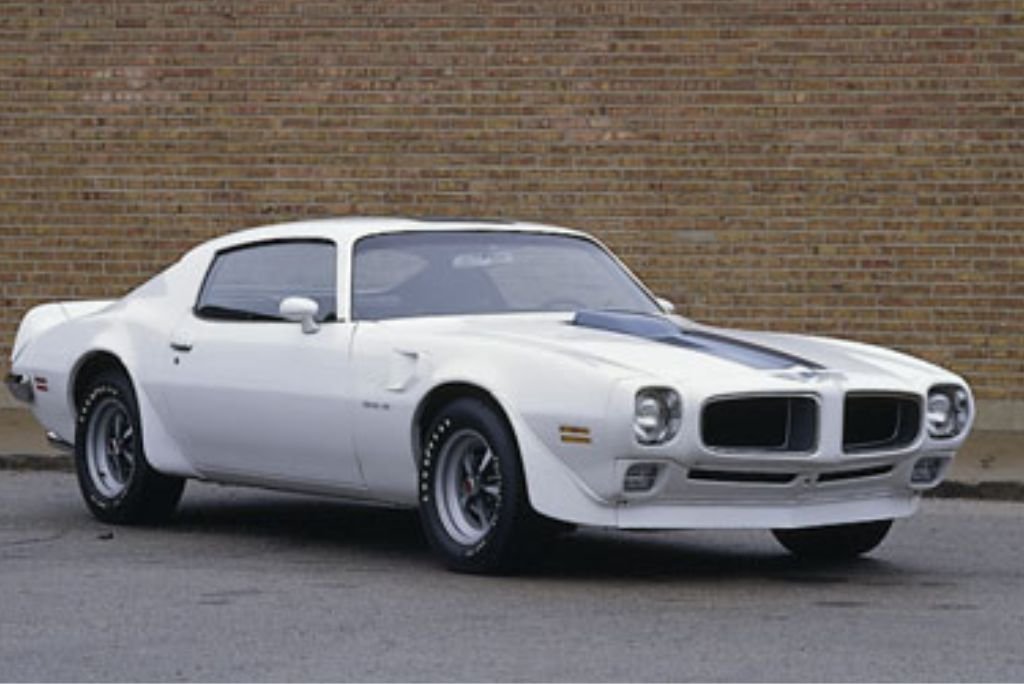
1970 brought a fully redesigned second-generation Firebird, and the Trans Am package became its halo trim. White paint with twin blue racing stripes was the launch combination, paired with a shaker hood scoop and aggressively styled front and rear ends. The Ram Air engines under the hood made the Trans Am more than a styling exercise — it could back up its looks on the road.
This is the body style that became iconic across the 1970s, eventually picking up the screaming-chicken hood decal that turned it into a household name. The 1970 model is the one many enthusiasts consider the cleanest Trans Am design, before later years added more graphics, more trim, and progressively softer engines as emissions rules tightened. It’s a quietly important year in the model’s history.
9. 1970 Oldsmobile 442 W-30
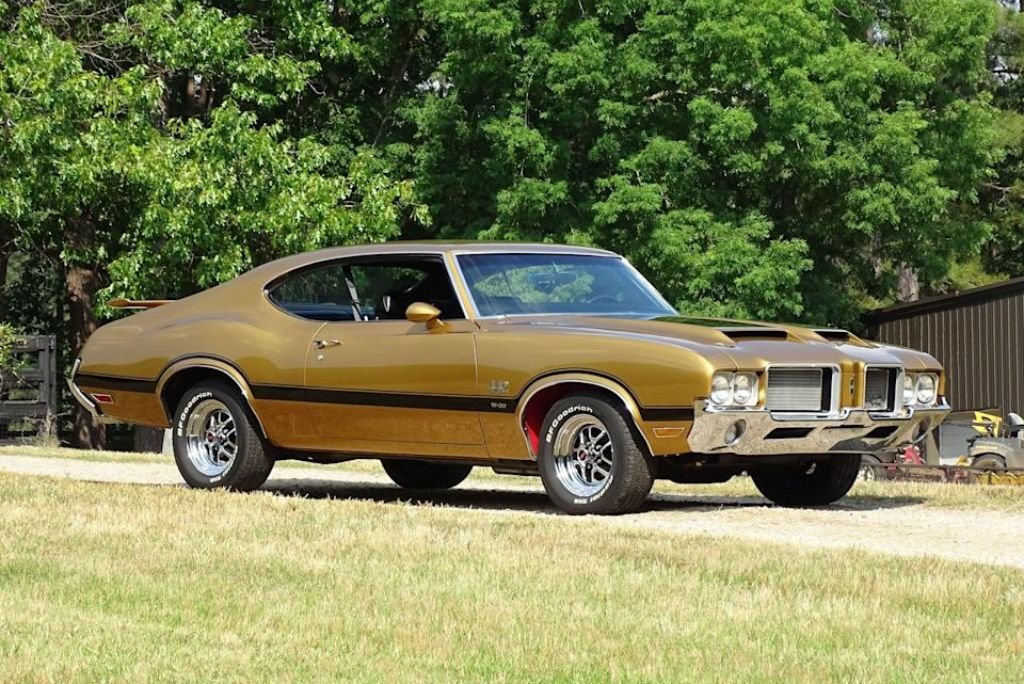
Oldsmobile wasn’t the brand most buyers expected to find on a drag strip in 1970, which is part of what makes the 442 interesting. The name originally referred to a 4-barrel carburetor, 4-speed transmission, and dual exhausts. By 1970, the 442 had grown from an option package into its own model, with the 455 big-block tucked under the hood and serious performance hardware to match.
The W-30 package took things further with a fiberglass twin-scoop hood, force-air induction, and other performance pieces. It’s one of the era’s classic examples of a “respectable” brand quietly building a serious performance car. Olds W-30s were taken seriously at the drag strip even when they didn’t get the magazine covers, and they have a strong following among collectors who appreciate the underplayed approach.
10. 1968 Shelby GT500
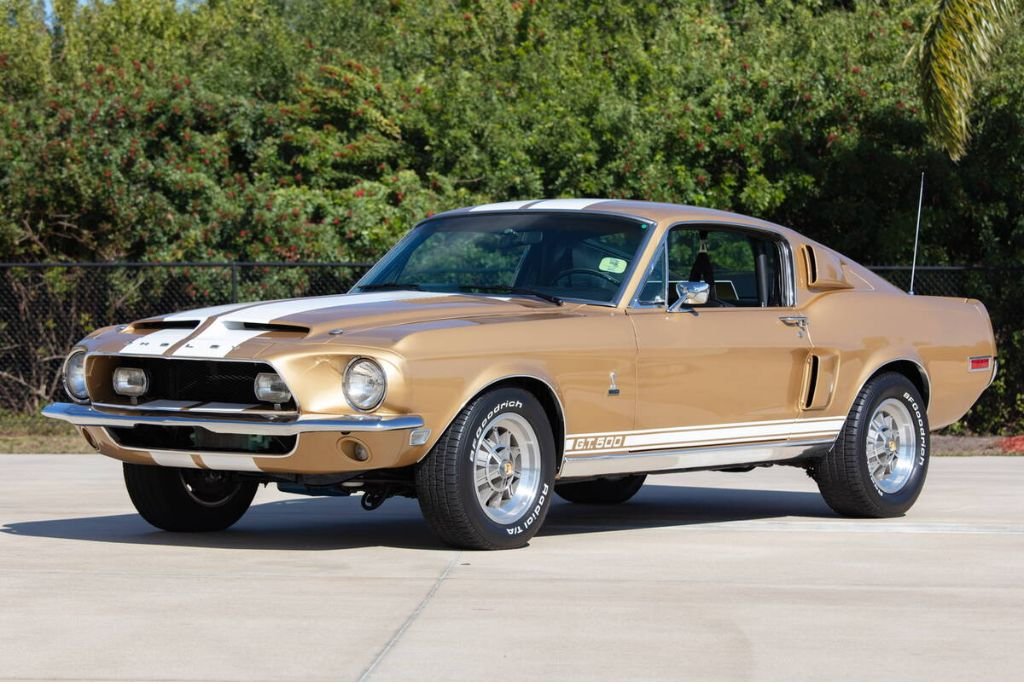
Carroll Shelby’s big-block treatment pushed the Mustang into heavyweight territory. The GT500 used a 428 cubic-inch engine and came with hood scoops, side scoops, and Shelby-specific badging that immediately set it apart from a standard Mustang. The 1968 model added some refinements over earlier GT500s, and by that point Shelby Mustangs were being assembled at A.O. Smith in Michigan rather than Shelby’s California shop.
Shelby’s name carried weight that Ford’s marketing team couldn’t simply buy. The GT500 was effectively the most exclusive way to order a Mustang, sold through a separate program with a smaller dealer network. It bridged Mustang accessibility with Shelby pedigree, and the 1968 models — built during the transition before the King of the Road variant arrived — are quietly some of the most desirable Shelbys today.
11. 1970 Dodge Challenger R/T
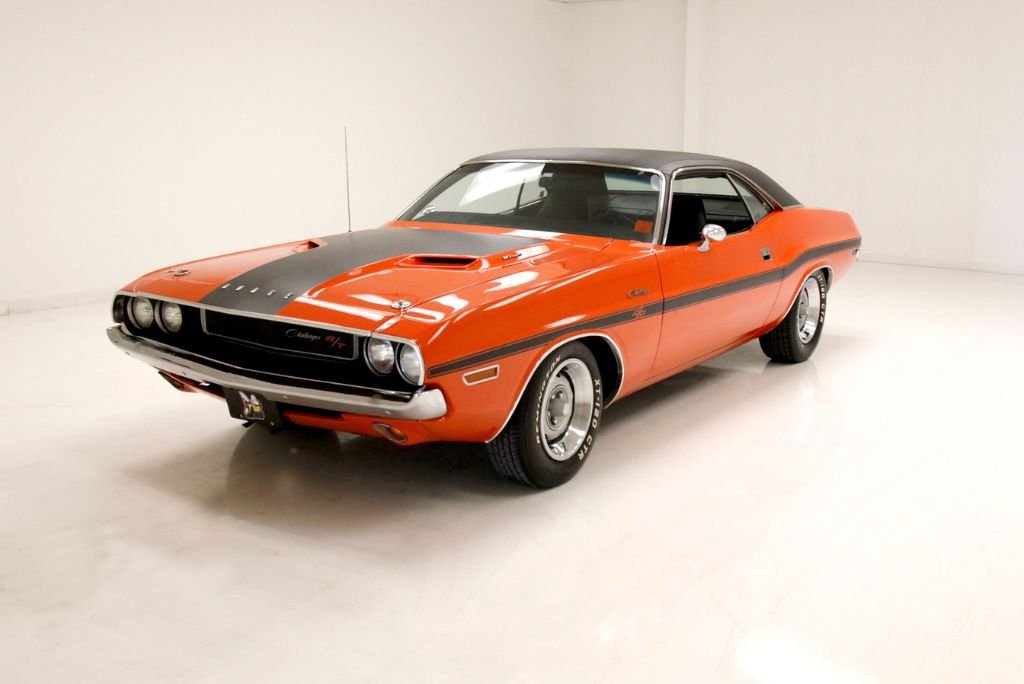
The Challenger arrived in 1970, sharing the E-body platform with the Plymouth Barracuda but riding on a slightly longer wheelbase with its own distinct styling. The R/T was the performance trim, available with a long list of V8 options that reached up to the 426 Hemi. A wide stance, hidden headlights, and bold factory colors like Plum Crazy, Sublime Green, and Hemi Orange gave it serious showroom presence.
A 1971 cult film put a white Challenger R/T at the center of its plot and helped cement the car’s place in pop culture. Even people who haven’t seen the movie tend to recognize the silhouette. Today the 1970 Challenger is one of the most replicated muscle car designs in restomod and reproduction circles, which speaks to how visually right the original got the proportions.
12. 1969 Chevrolet Camaro Z/28
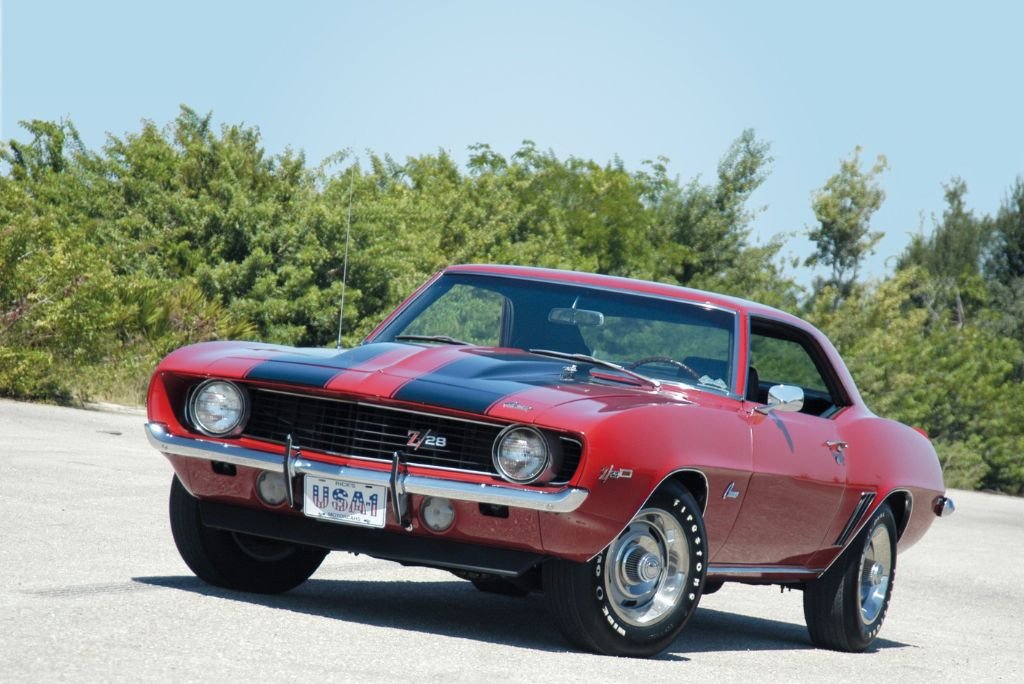
The Z/28 package was created to homologate the Camaro for SCCA Trans Am racing, which required a small-block V8 under 305 cubic inches. The 302 small-block in the Z/28 was built specifically for that purpose, with high-revving character better suited to road courses than drag strips. 1969 brought the most aggressive first-generation Camaro styling, with cleaner lines and a stronger stance.
This is the Camaro that serious racing fans tend to pick over the SS. It wasn’t built to win drag strip arguments — it was built to win road races, and it did. The cowl induction hood and rally stripes have become defining elements of the first-generation Z/28 look, copied on countless restomods and modern tribute builds in the years since.
13. 1970 Buick GSX Stage 1
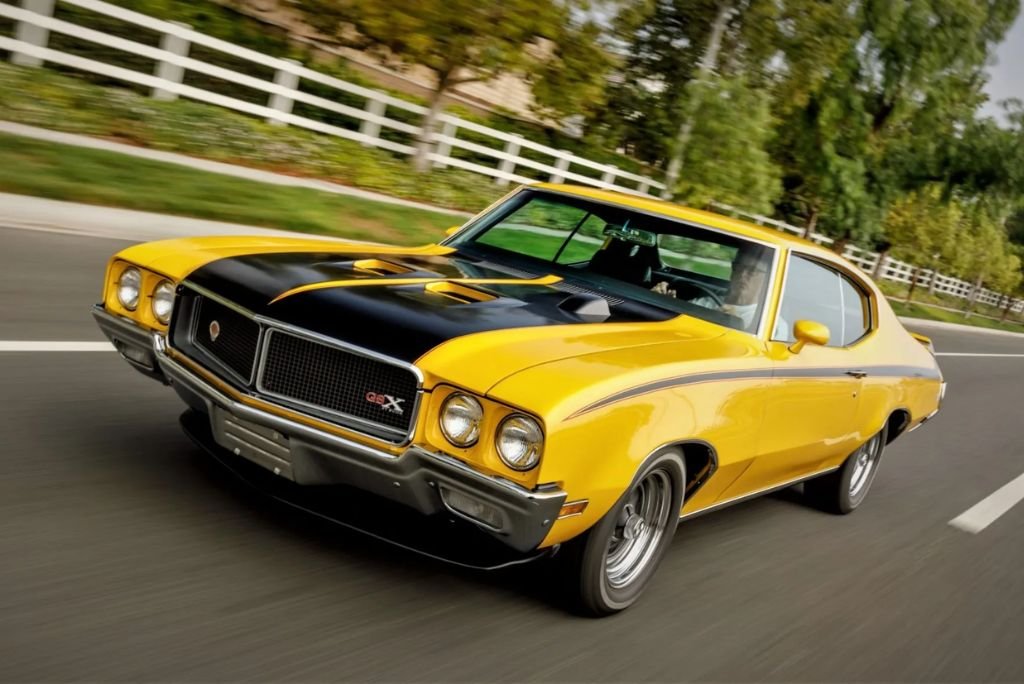
Buick spent most of the 1960s building reputable luxury and family cars, which makes the GSX a genuine surprise. Based on the Skylark, the GSX got a 455 big-block, a distinctive stripe package, a rear spoiler, and just two launch colors — Saturn Yellow and Apollo White, both bold enough to make sure no one missed it. It wasn’t trying to look like anything else in the Buick lineup.
The Stage 1 package added performance upgrades that made the GSX a genuine quarter-mile contender, not just a comfortable cruiser with a big engine. It’s the kind of car that surprises people who think they have the muscle car landscape mapped out. Buick rarely gets named alongside Pontiac or Plymouth in muscle car conversations, but the GSX absolutely earns its spot on a list like this.
14. 1962 Chevrolet Impala SS 409
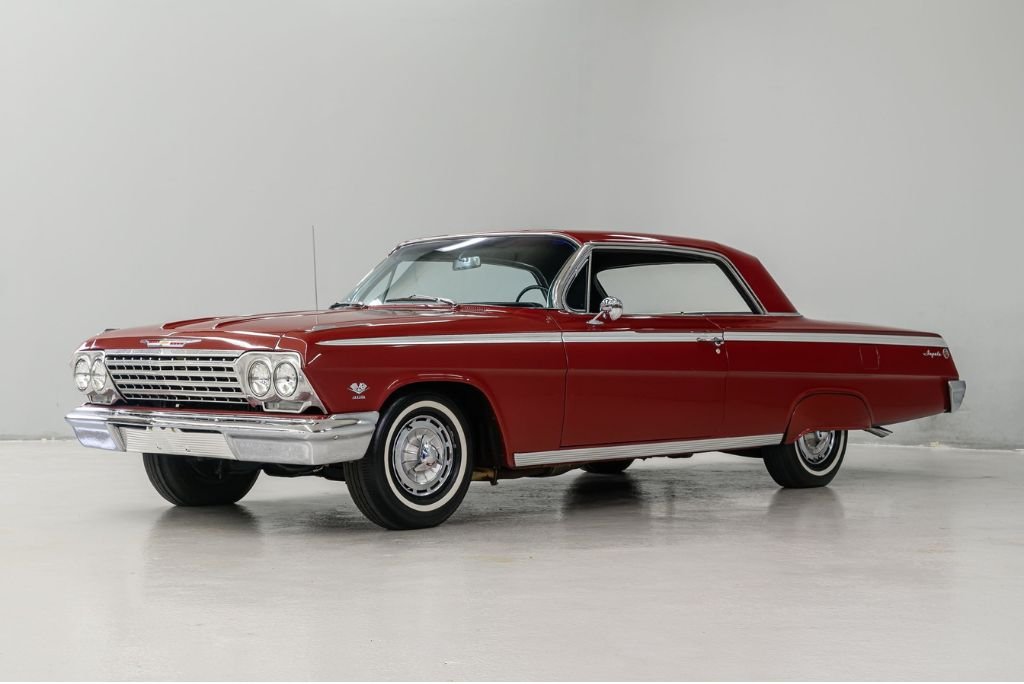
The Impala SS 409 predates what most people call the muscle car era. By the strict definition, the genre starts with the 1964 GTO. But the 409 was the engine that proved Detroit’s appetite for big-displacement performance, and the Impala SS was where most buyers actually encountered it — a full-size car with a big V8 that made it feel anything but family-grade once you put your foot down.
The Beach Boys recorded “409” in 1962, a song dedicated to the engine that gave the car its nickname. That single piece of pop culture history did more to mythologize the Impala SS 409 than any drag strip result ever could. Including it here is a nod to the full lineage — these were the cars that taught Detroit how loud big-block performance could sell to ordinary buyers.
15. 1969 AMC AMX
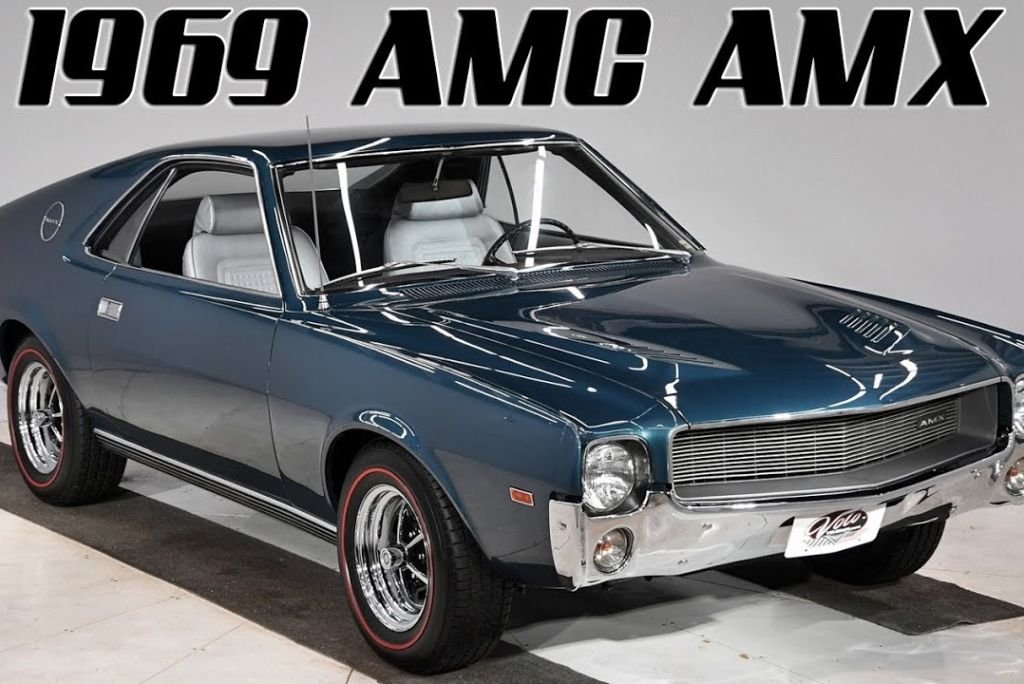
AMC, the underdog of Detroit, did something none of the Big Three did in the late 1960s: it built a true two-seat American car alongside the Corvette. The AMX rode on a shortened Javelin platform, and the result was a tight, compact sports-muscle hybrid. Engine options ran up to the 390 V8, which was a lot of motor for a body that small.
The two-seat layout alone made it stand out — no rear seat at all, which was almost unheard of for a Detroit muscle car. AMC leaned into the underdog status with patriotic red, white, and blue paint schemes and a smaller dealer footprint than its rivals. The AMX has quietly become a favorite among collectors who appreciate overlooked cars and don’t mind being the only one at the show driving one.
16. 1970 Mercury Cougar Eliminator
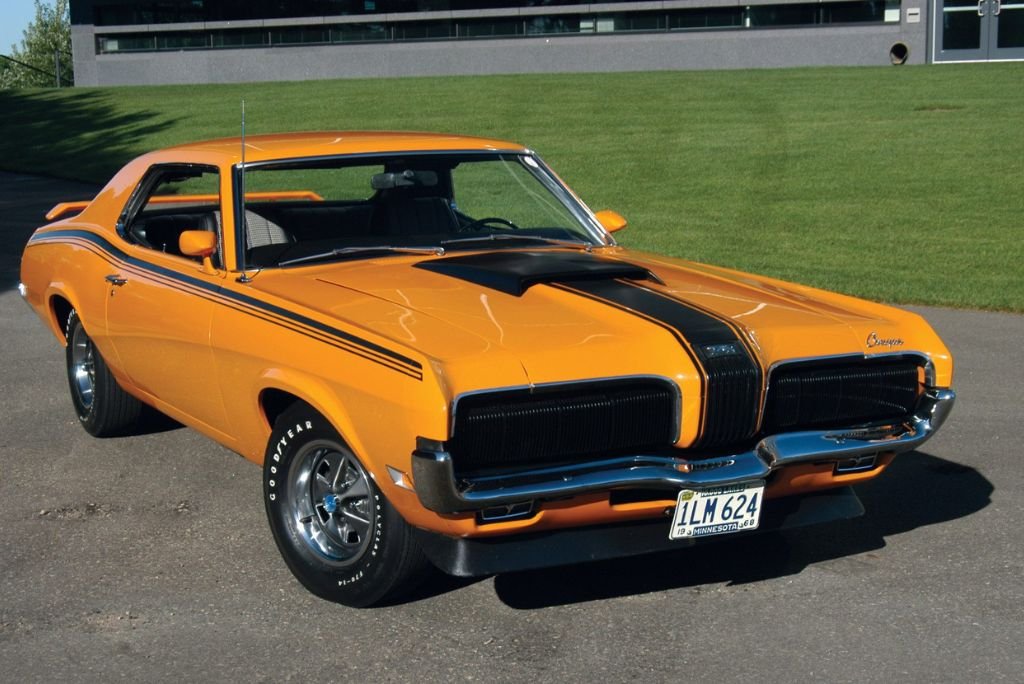
The Cougar was Mercury’s take on the Mustang platform, generally pitched as a more upscale pony car for buyers who wanted something a step up. The Eliminator package, offered in 1969 and 1970, dressed it up in the other direction — bold side stripes, blacked-out grille, hood scoop, and a rear spoiler. Color choices included Competition Orange, Bright Blue, and Pastel Blue, all chosen for impact.
The Eliminator delivered serious engine choices, including the Boss 302 and the 428 Cobra Jet depending on the year. For buyers who wanted Mustang performance with slightly different styling and a bit more presence, this was the move. Mercury usually plays second to the Big Three in muscle car conversations, but the Eliminator has earned a quiet reputation among people who know the era well.
17. 1970 AMC Rebel “The Machine”
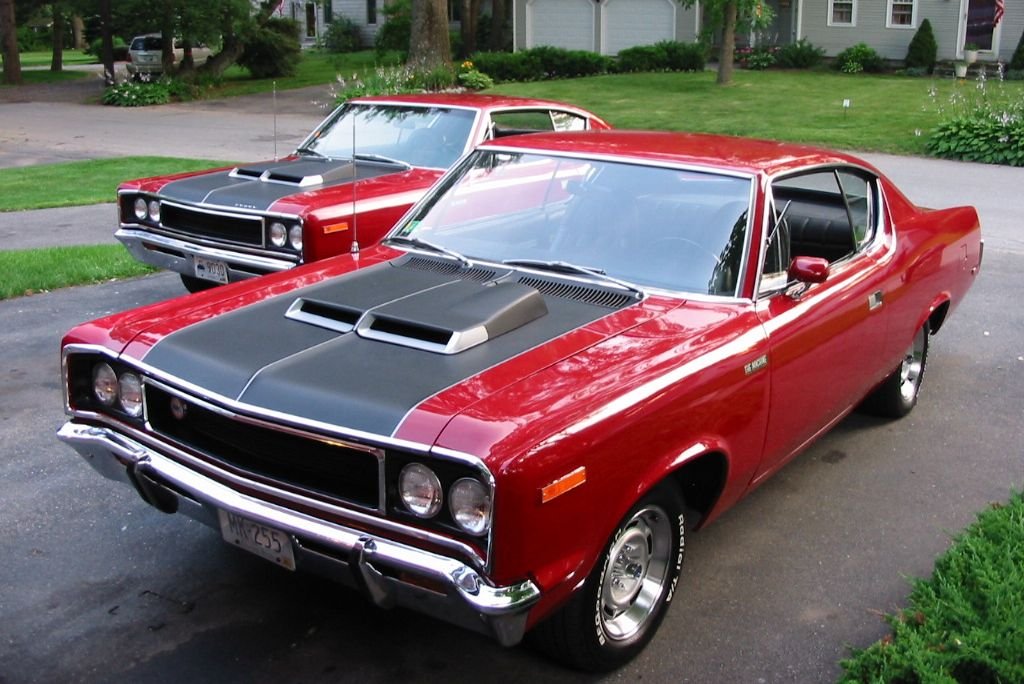
AMC built a sense of humor into “The Machine” — that was literally its trim name, displayed right on the car. Based on the mid-size Rebel platform, it got the 390 V8, a hood scoop with an integrated tachometer, and a paint scheme that ran red, white, and blue stripes across an otherwise white body. Only a small production run was built, and the launch year was the only year.
The patriotic paint job alone makes it one of the most photographed AMCs of the era. It came at a moment when Detroit was experimenting with bolder styling, and AMC went further than most. The Machine wasn’t the fastest muscle car of 1970, and it didn’t need to be — it was probably the easiest to spot at a stoplight, and that turned out to be enough.
18. 1970 Plymouth AAR ‘Cuda
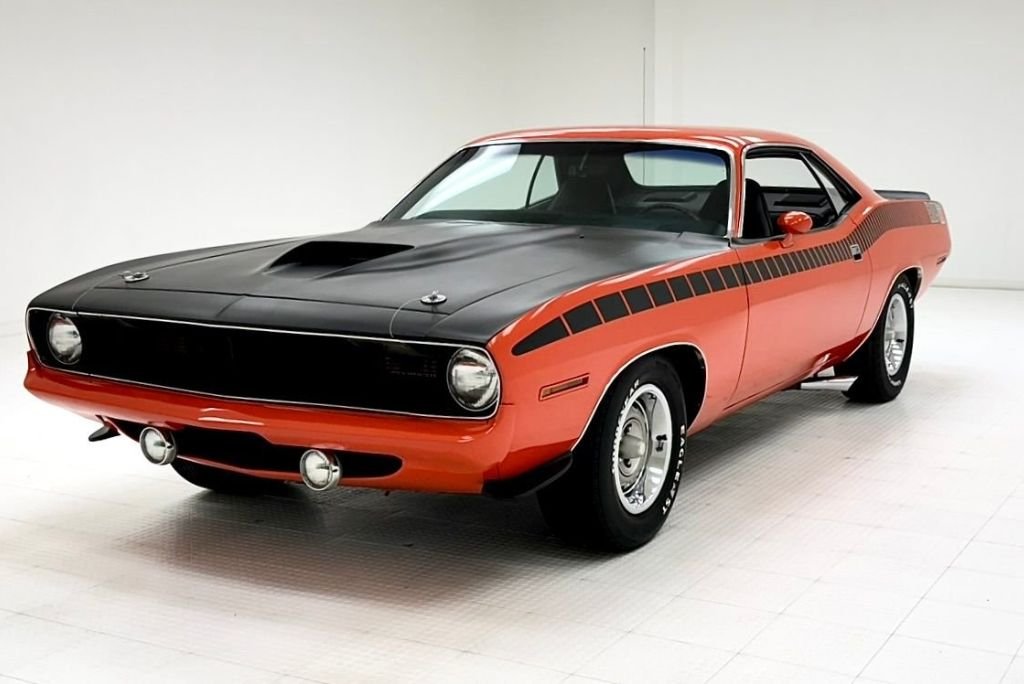
While the Hemi ‘Cuda chased horsepower numbers, the AAR ‘Cuda was built for the road course. Plymouth created it to homologate the Barracuda for SCCA Trans Am racing, where Dan Gurney’s All American Racers team ran the program. The 340 small-block was the heart of the package, paired with stiffer suspension and a different rear end ratio than the standard ‘Cuda.
The AAR had a few details that immediately set it apart from any other Barracuda: a matte black fiberglass hood, side-exit exhausts venting just behind the front wheels, and an AAR side stripe running the length of the car. It was a one-year-only model. Hardcore Mopar fans love it; casual fans often walk past without recognizing it. That’s part of what makes it interesting.
19. 1970 Plymouth Duster 340
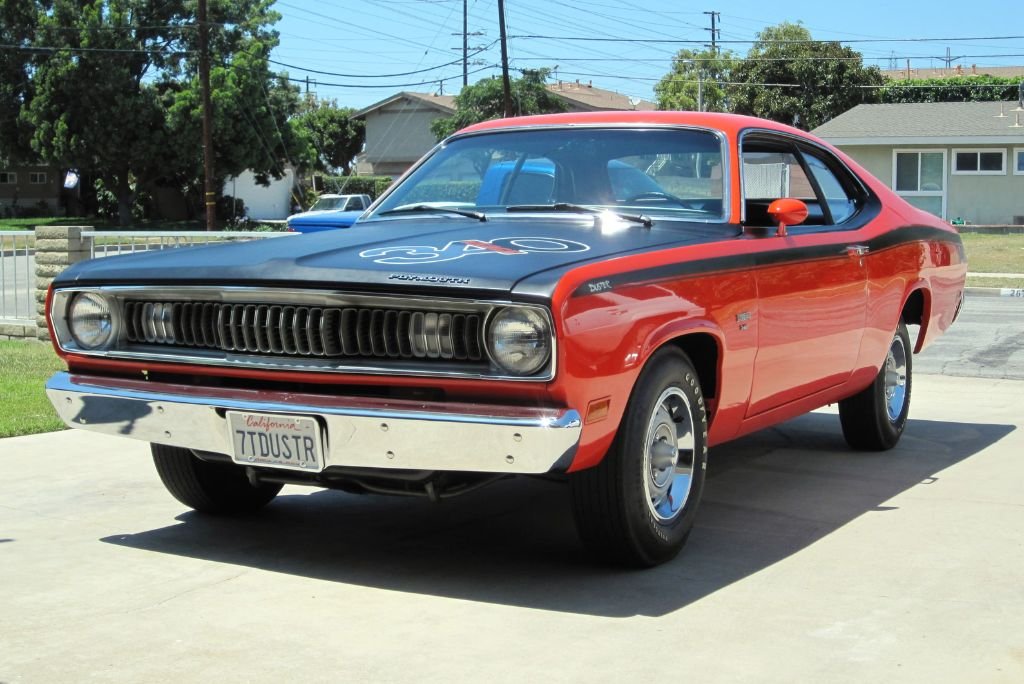
The Duster was Plymouth’s compact for 1970, built on the Valiant platform with a fastback roofline that gave it a more youthful look than its sedan sibling. The Duster 340 took the formula in a performance direction: small body, small-block 340 V8, and a sticker price well below the larger E-body and B-body muscle cars. It quickly became Plymouth’s affordable performance option for younger buyers.
For a lot of drivers in 1970 and 1971, the Duster 340 was the most practical entry into muscle car ownership. It wasn’t going to outrun a Hemi, but it could handle itself against most things on a back road and didn’t break the bank or scare off insurance agents. Plenty of older drivers today remember a Duster as their actual first muscle car, which is its own kind of legacy.
20. 1970 Ford Torino Cobra
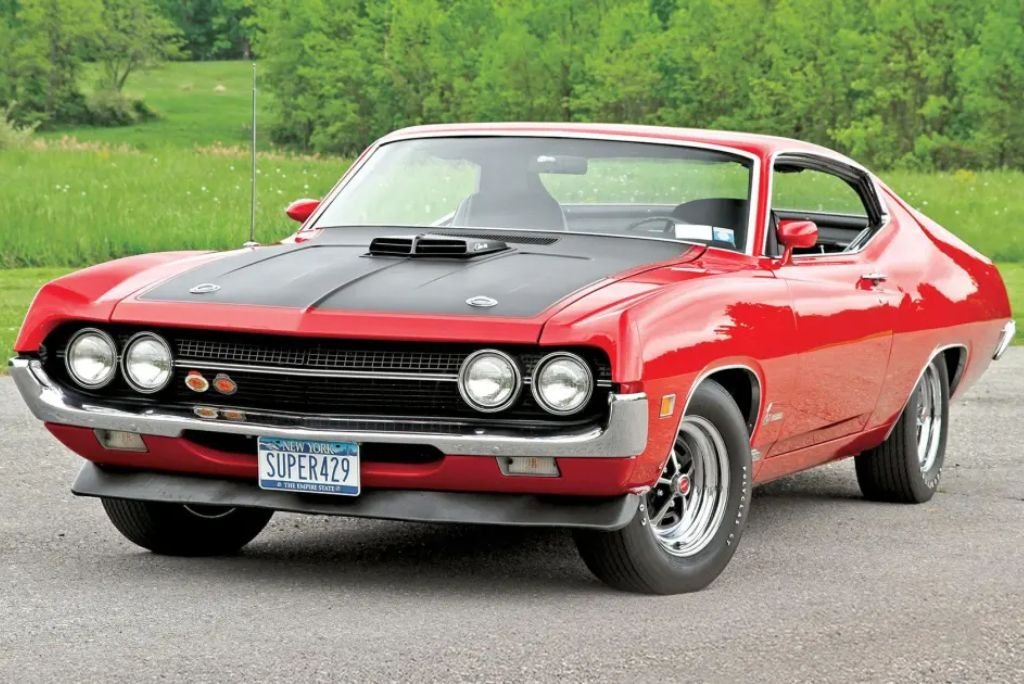
The Torino Cobra was Ford’s mid-size muscle entry, sitting alongside the Mustang in the lineup but offering more interior room and a bigger engine in a less flashy package. The Cobra trim came with a 429 Cobra Jet, hood scoop options including the shaker, and Cobra-specific badging that helped it stand apart from a regular Torino on the showroom floor.
It’s the kind of muscle car that didn’t get the magazine covers but quietly delivered the goods. NASCAR fans paid attention because the Torino body was winning in stock car racing during this period. For drivers who wanted big-block power in something other than a pony car, the Cobra was a strong choice. It still tends to fly under the radar at shows, which Torino owners often seem perfectly happy about.
21. 1966 Shelby GT350H
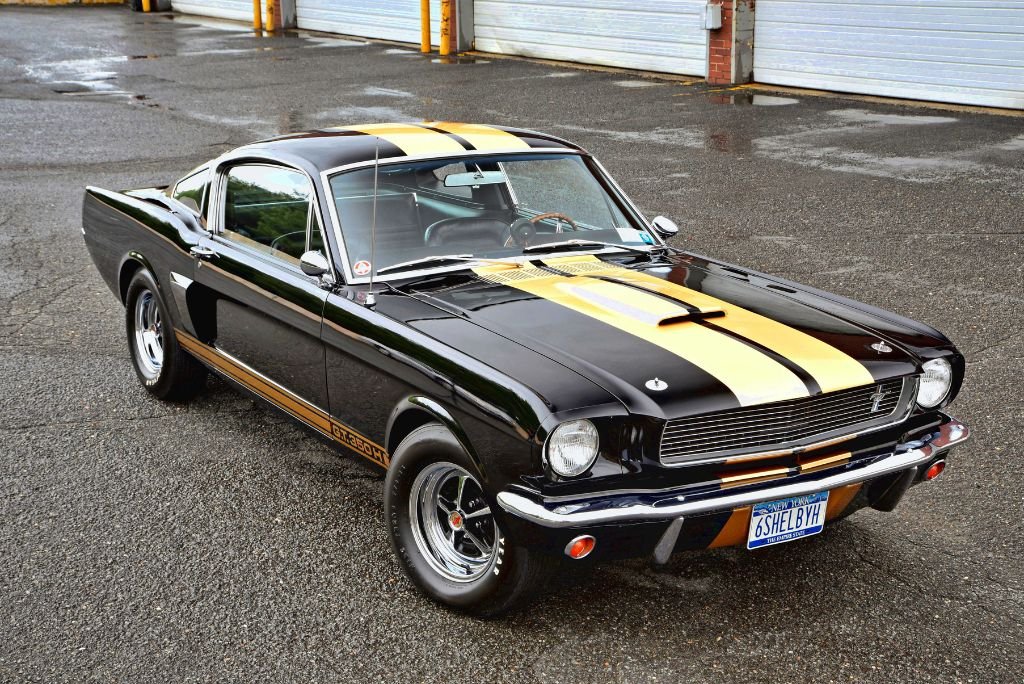
In 1966, Hertz partnered with Shelby American on a fleet of GT350s that could be rented by qualified drivers through participating Hertz locations. The cars were finished in black with gold stripes and Hertz-specific badging, and they were known internally as the “Rent-a-Racer” program. A relatively small number were built specifically for the partnership, all in that distinctive paint scheme.
Stories about how Hertz customers used these cars have circulated for decades — some plausible, some clearly embellished over the years. What’s clear is that the GT350H became part of muscle car folklore in a way few cars do. Today, they’re among the more recognizable Shelbys at any classic car show, instantly identifiable by that black-and-gold combination from across the parking lot.
22. 1969 Yenko Camaro
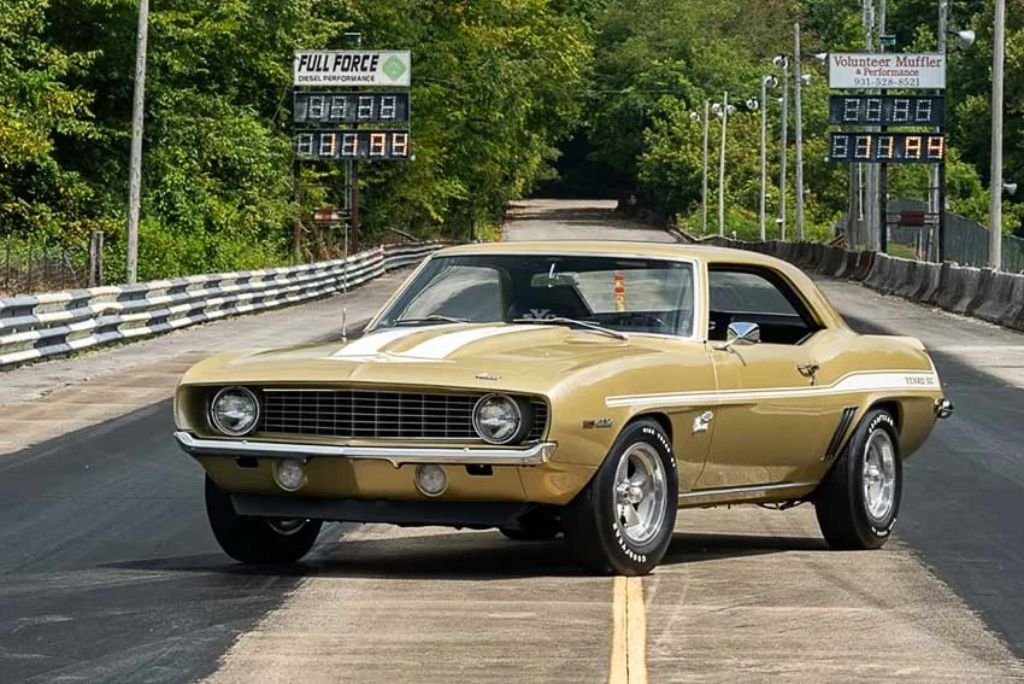
Don Yenko ran a Chevrolet dealership in Pennsylvania and saw that Chevy’s regular 427 wasn’t available in the Camaro from the factory. So he used Chevy’s COPO system — Central Office Production Order — to special-order Camaros with the 427 installed at the assembly plant, then added his own badging, stripes, and trim once the cars reached his dealership.
The result is one of the most coveted Camaros ever built. Yenko cars wore distinctive sYc graphics and came in factory colors like Daytona Yellow and Hugger Orange. The combination of factory big-block power and dealer exclusivity created a small legend that still draws crowds. Verified Yenkos require careful documentation today, and confirmed examples have a strong following among Chevy collectors who know the difference.
23. 1969 Ford Mustang Boss 429
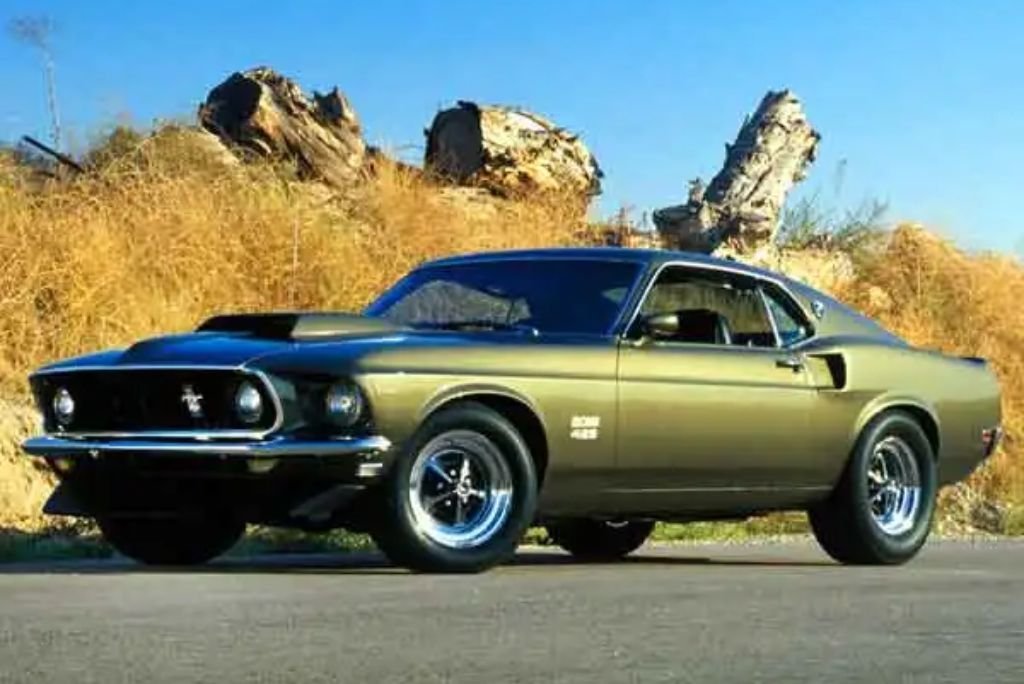
The Boss 429 existed mostly because Ford needed to homologate its 429 engine for NASCAR competition. NASCAR rules required the engine to be available in a production passenger car, so Ford contracted an outside shop called Kar Kraft, in Brighton, Michigan, to modify Mustangs to accept the huge engine. The Mustang’s engine bay had to be widened to make it fit.
The result was one of the rarest factory Mustangs of the era. The hood scoop was functional, sitting above an engine that barely cleared the inner fenders. Boss 429s weren’t built in large numbers, and the homologation story gives them a different pedigree than other Mustangs from the same year. Among Ford collectors, they occupy their own category, somewhat separate from the rest of the Mustang lineup.
24. 1969 Ford Talladega
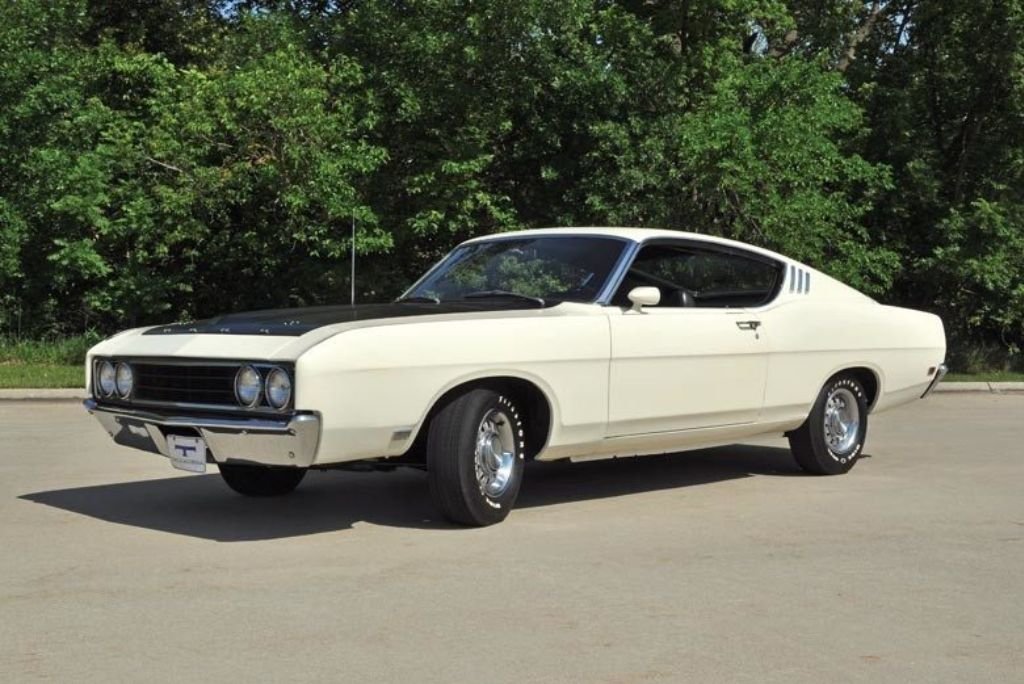
Like the Boss 429, the Talladega was a NASCAR homologation special. To make the Torino more competitive on superspeedways, Ford extended the front end, lowered the front bumper, and tweaked the body for better aerodynamics. The result was a Torino with a distinctly different nose — sloped and elongated in a way that paid off at high speeds on the big tracks.
The Talladega didn’t get the styling magazine attention of the wing cars that followed a year later, but it’s part of the same aerodynamic NASCAR arms race. Most buyers in 1969 didn’t even realize this was a different car at a glance — the changes were subtle to a casual eye. To anyone who knows what to look for, the extended nose is unmistakable, and the racing history is right there with it.
25. 1970 Chevrolet El Camino SS 454
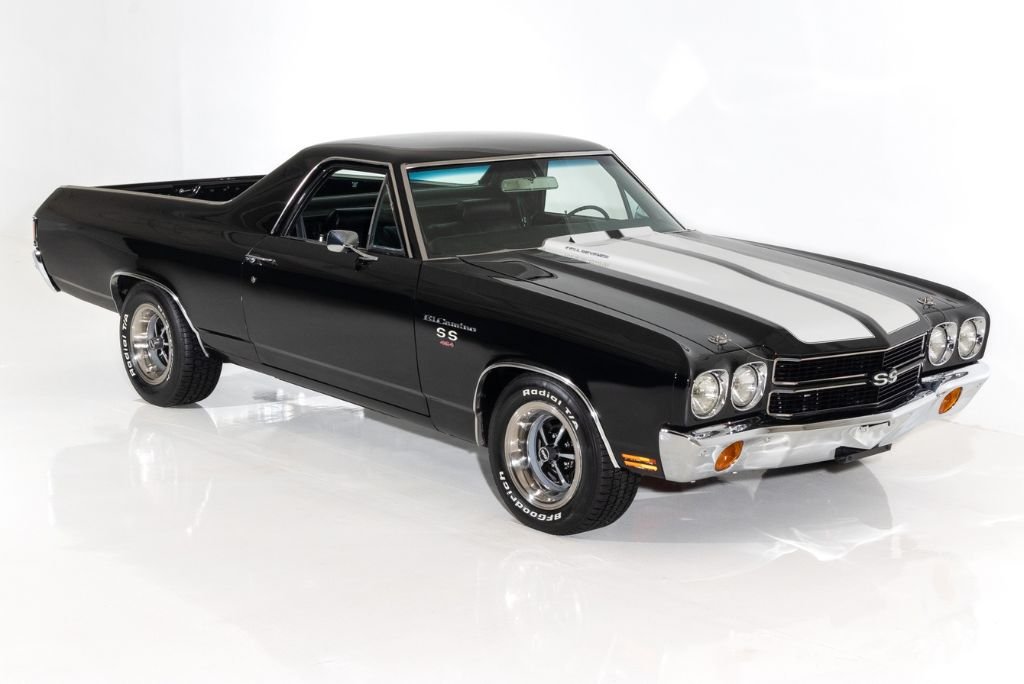
The El Camino split the difference between car and pickup, riding on the same chassis as the Chevelle but with an open bed instead of a back seat. The SS 454 package brought the same big-block 454 that powered the Chevelle SS, dropped into a body that could haul plywood on Sunday and still throw down at a stoplight on Monday morning. It wasn’t trying to be subtle about either side of its personality.
That combination of muscle car drivetrain and pickup utility made the SS 454 El Camino one of the more unusual muscle vehicles of the era. Some buyers genuinely used them as work vehicles; others bought them as straight-up performance cars and never put anything in the bed. The 1970 model with the cowl induction hood is the one most often pictured when people think of the El Camino SS at its peak.
26. 1968 Hurst/Olds 442
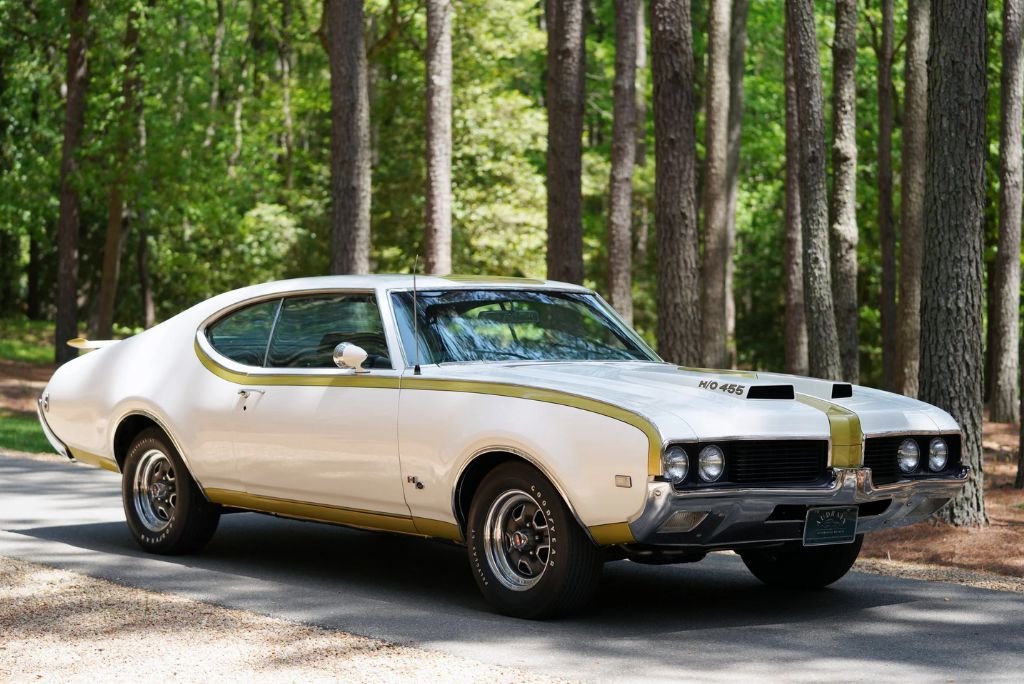
General Motors had a corporate rule limiting big engines in mid-size cars during the late 1960s, which kept Oldsmobile from putting the 455 into the 442. Hurst Performance — best known for its shifters — partnered with Olds to work around that rule. The 1968 Hurst/Olds was the first major collaboration, finished outside the normal production process so the 455 could go in legally.
The car came in a distinctive Peruvian Silver and black two-tone paint scheme, with Hurst/Olds badging on the trunk and quarter panels. Production was small, and the cars were sold through a limited group of participating Olds dealers. The 1968 H/O kicked off a long Hurst/Olds tradition that returned in various forms across the 1970s and 1980s, but the original is the one that started it all.
27. 1973 Pontiac Trans Am Super Duty 455
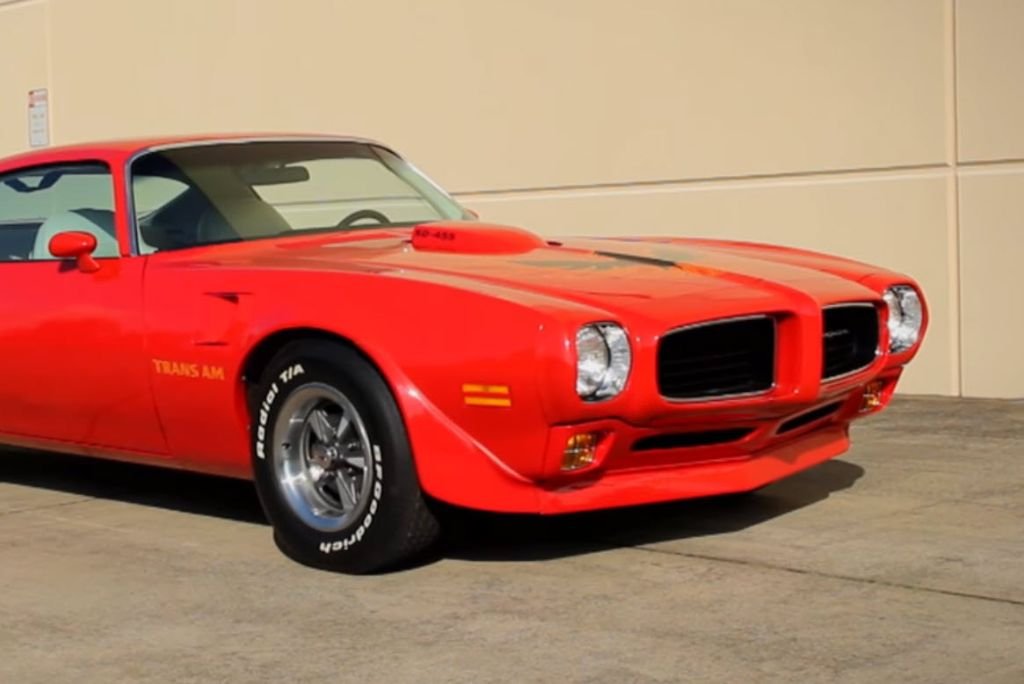
By 1973, emissions regulations, insurance rates, and the oil crisis were starting to choke the muscle car era. Most factory performance cars had already been dialed back, and many of the legendary engine options from a few years earlier were gone. Pontiac, working against that trend, offered the Super Duty 455 in the Trans Am — a serious engine in a moment when serious engines were quietly disappearing from Detroit’s lineups.
The SD-455 is often called the last real muscle car of the original era. That label gets argued about, but it isn’t unreasonable. Production was small, the engine was effectively hand-built and treated as a separate program, and the car arrived during a year most enthusiasts dismiss as a low point for American performance. That contrast is a big part of what makes it memorable today.
28. 1970 Dodge Challenger T/A
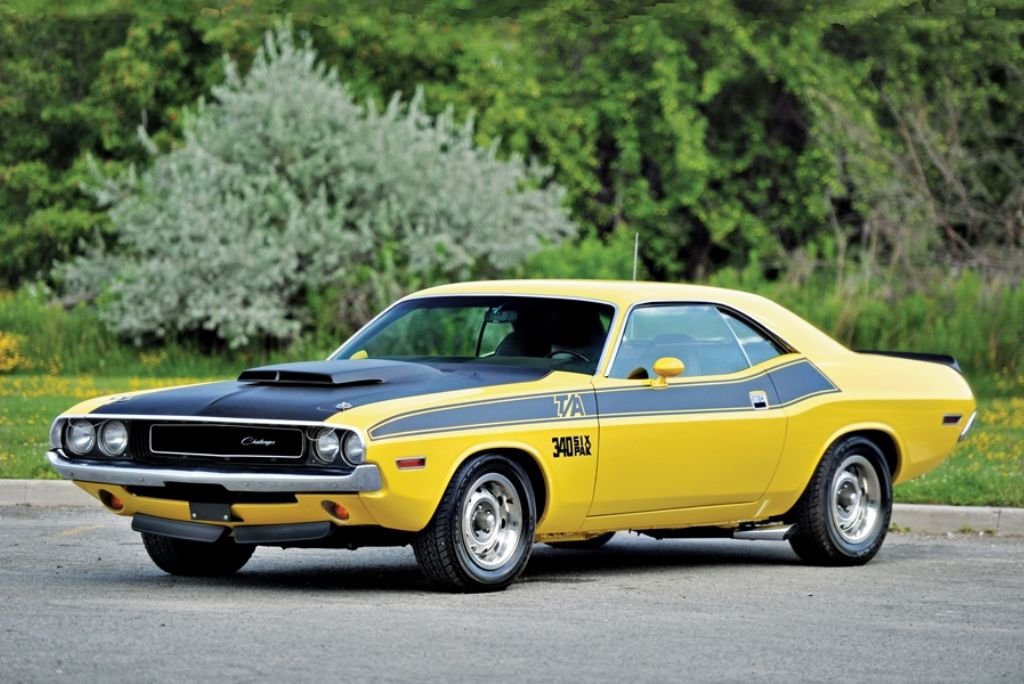
The Challenger T/A was Dodge’s homologation special for SCCA Trans Am racing, built in parallel with Plymouth’s AAR ‘Cuda program. The two cars shared the same fundamental approach: a 340 small-block, a matte black fiberglass hood with a built-in scoop, and side-exit exhausts that vented just ahead of the rear wheels. Stiffer suspension and a quicker rear end completed the package.
The T/A was a one-year-only model, built specifically to meet racing rules. The body modifications and exhaust routing gave it a look unlike any other Challenger, even within the R/T performance lineup. Today the T/A is one of the most distinctive Challengers from a model year already known for distinctive styling, and a clear sibling to its Plymouth cousin a few rows down on a Mopar show field.
29. 1969 Dodge Charger Daytona
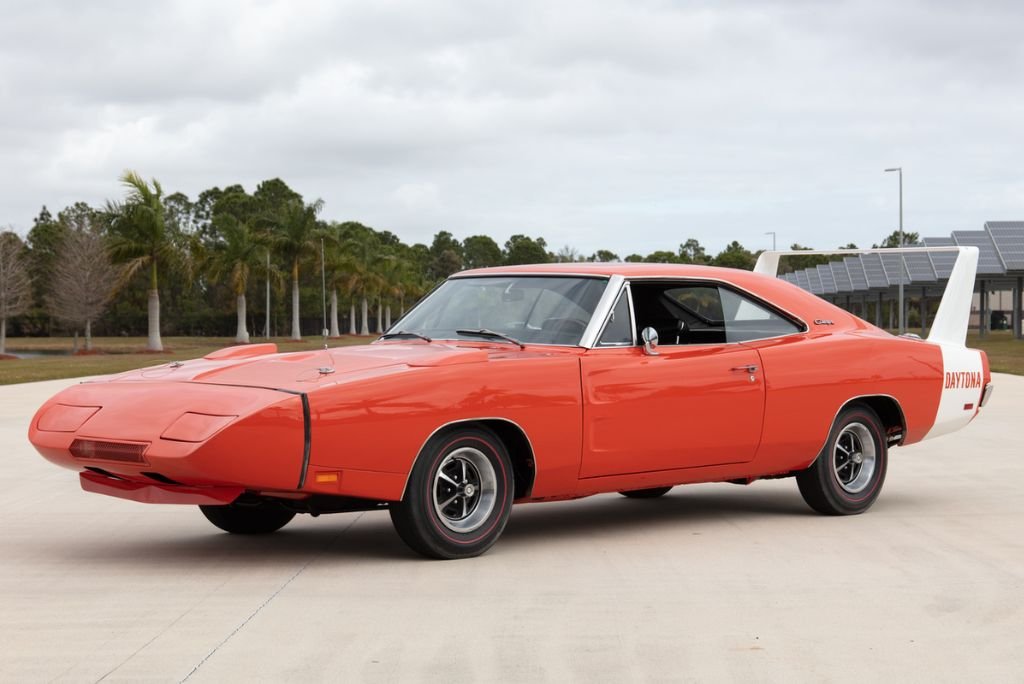
NASCAR superspeedways had become an aerodynamic battle by the late 1960s, and Dodge engineers responded with the Charger Daytona. A pointed nose cone replaced the standard grille, and a tall rear wing rose well above the trunk on long vertical struts. The road-going version was built mostly to satisfy NASCAR’s homologation rules requiring a certain number of street cars to be sold.
The rear wing was famously tall — high enough, the story goes, to clear an open trunk lid. Whether that was the actual engineering reason or a happy coincidence depends on whose account you read. Either way, the Daytona looks like nothing else on the road. Original cars are among the most photographed muscle cars at any modern show, and they tend to draw a small crowd whenever they appear.
30. 1970 Plymouth Superbird
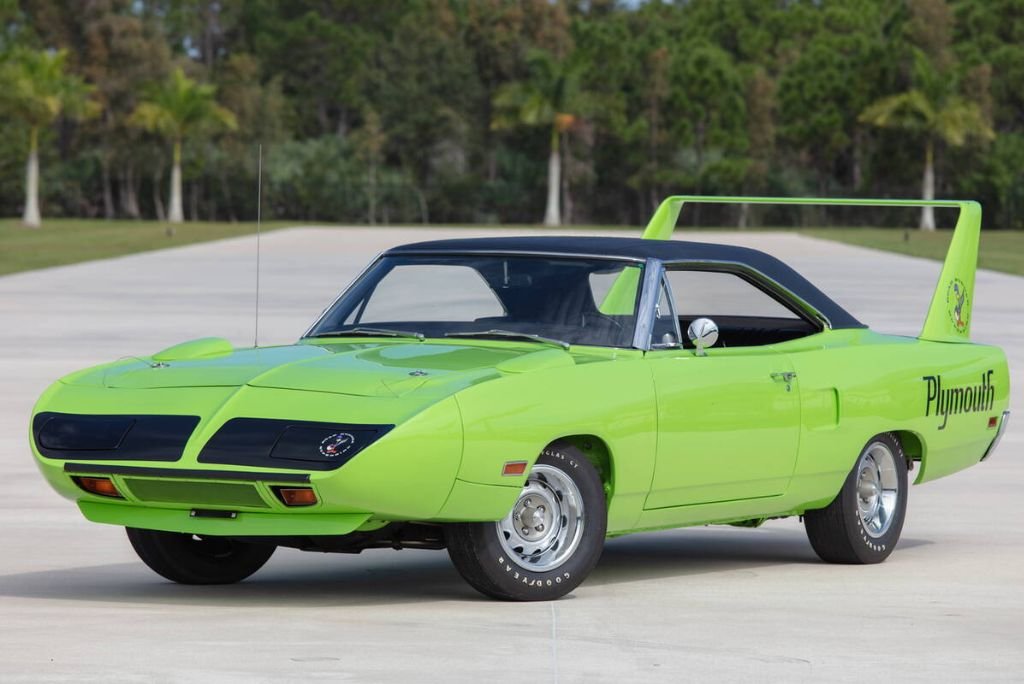
The Superbird was Plymouth’s answer to the Charger Daytona, built for the 1970 NASCAR season. Like the Daytona, it got a pointed nose cone and a tall rear wing on long struts. Plymouth needed the car partly to lure Richard Petty back from Ford, where he had spent the previous season, and his return to the brand is part of the Superbird’s history in NASCAR circles.
Compared to the Daytona, the Superbird was built in slightly larger numbers, and many actually sat on dealer lots well into 1971 because the styling was simply too radical for everyday buyers at the time. That contrast — too wild for showrooms, too dominant on the track — is part of why the wing cars now feel like the right way to close any conversation about muscle car excess.